



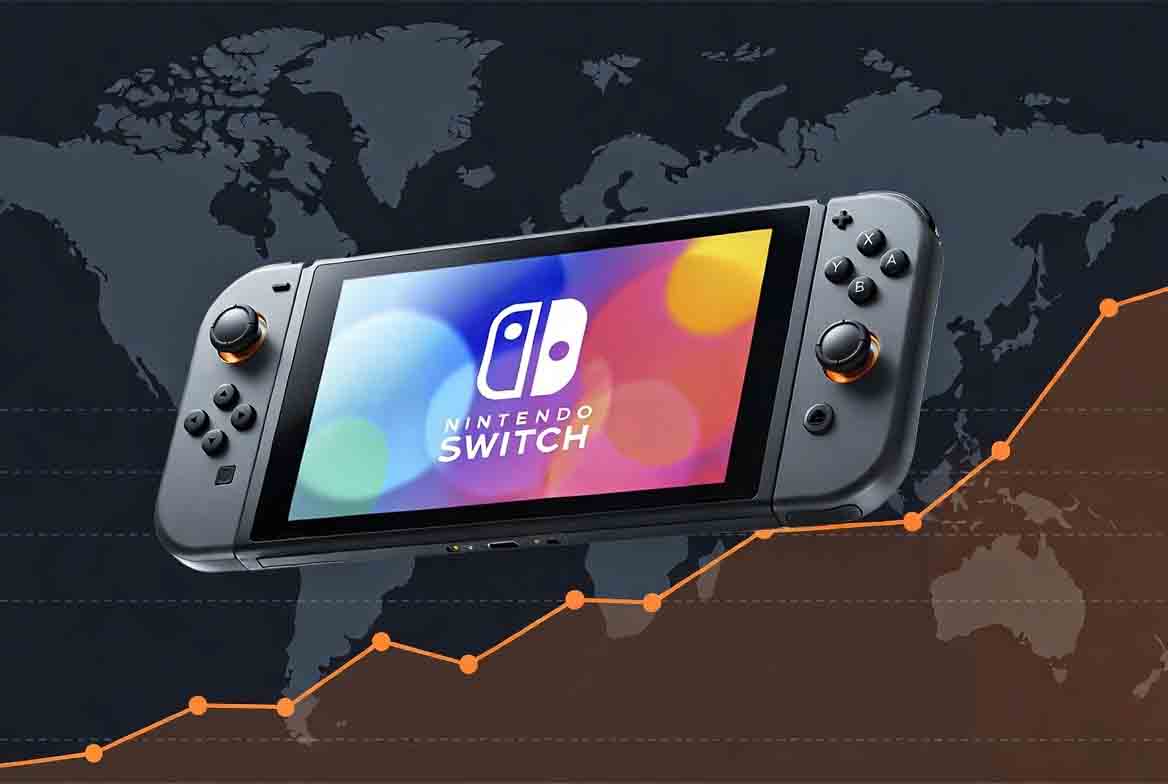
Nintendo Switch 2 Could Get More Expensive in 2026, Research Firm Predicts.
Nintendo may be planning to adjust the price of its latest flagship console, the Nintendo Switch 2, as early as 2026, according to a new industry forecast. A leading video games market research firm believes economic pressures – including rising manufacturing costs, tariffs, and global supply-chain shifts – could push Nintendo toward a global price increase or SKU consolidation for the console later this year.
Analyst Forecast: Price Headwinds for Switch 2
In its annual 2026 predictions report, Niko Partners — a respected video game business intelligence and consumer insights firm — forecast that the Switch 2 will likely see a price rise. The report highlights that, although Nintendo priced the console competitively against rivals like the PlayStation 5 and Xbox Series X|S, ongoing economic headwinds could make maintaining that price untenable.
According to the firm:
Nintendo’s current price point on the Switch 2 is attractive compared to competing consoles, but it may follow in Sony’s and Microsoft’s footsteps with its own price hike due to tariffs, increased memory costs, and broader macroeconomic pressures.
One suggested outcome is that Nintendo might discontinue the standalone $449 base model and instead promote $499 (or higher) bundles — particularly ones that include popular first-party games like Mario Kart World.
Why Prices Might Change
Several cost factors are cited by analysts as reasons Nintendo could rethink Switch 2 pricing in 2026:
-
Tariffs on electronics and components: Import duties from countries such as China, Vietnam, and Japan have increased the cost of producing electronics, including gaming consoles.
-
Memory and storage costs: Global demand for RAM and storage — partly driven by AI data center growth — has pushed up prices for these key components.
-
Macroeconomic volatility: Broader economic conditions, including inflation and shifting currency values, can squeeze profit margins for consumer hardware.
Nintendo president Shuntaro Furukawa acknowledged that memory price volatility is something the company is watching closely, though he emphasized that any future hardware price changes remain speculative.
Historical and Competitive Context
Nintendo resisted raising the Switch 2’s price at launch in 2025, holding it at $449 USD (with bundles around $499) despite increased tariffs affecting imports. That contrasts with Sony and Microsoft, which have already raised prices on their next-gen consoles in key regions in recent years.
However, Nintendo has previously increased hardware prices — for example, the original Switch’s MSRP was adjusted upward in the U.S. due to “market conditions.” That precedent suggests a future price shift for the Switch 2 isn’t out of the question if component costs continue to rise.
What This Would Mean for Buyers
At this stage, Nintendo has not announced an official price increase for the Switch 2. But if the forecast is accurate, consumers in 2026 might see:
-
A higher MSRP for the base console compared with its original $449 launch price.
-
More emphasis on premium bundles that include games or accessories.
-
Region-specific pricing adjustments in markets with higher tariffs or import costs.
Such a change could bring the Switch 2’s pricing more in line with competitors but may also challenge Nintendo’s traditional strategy of keeping hardware accessible relative to rivals.
Broader Industry Signals
Other industry data and analysis add context to why pricing pressure is a hot topic for current-gen consoles:
-
Earlier forecasts anticipated strong Switch 2 sales, with Nintendo projecting 15 million units sold in its first fiscal year.
-
Tariff and pricing concerns have been discussed widely, with firms like DFC Intelligence noting that pricing strategies for Switch 2 hardware might already have “baked in” potential cost rises — though some analysts still view future hikes as plausible.
-
Discussion among gamers and market watchers on platforms like X and Reddit reflects mixed sentiment about whether a price jump would affect demand. (Community analysis)
While nothing is official yet, this forecast points to how broader economic forces are impacting hardware pricing in the games industry.